
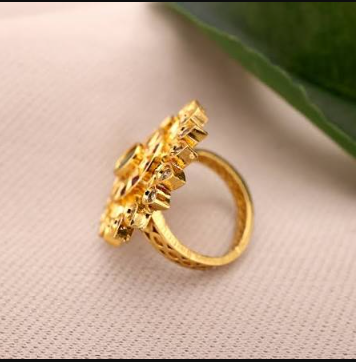

Of all the pieces of jewellery a woman wears, rings are the most visible in daily interaction. Every time you reach for something, hand someone a document, or gesture in conversation, your rings are in the frame. This visibility means ring choice is more considered than it might appear. It is not just about what looks beautiful in isolation, but what works with your hands, your habits, and the life you actually lead.
Gold rings for women occupy a uniquely broad category. A simple band worn on the ring finger carries a specific cultural significance. An elaborate kundan ring worn on the index finger at a wedding is a fashion statement. A daily-wear solitaire is an investment. And stacked rings across multiple fingers are a contemporary way to express personality through jewellery. Getting the right piece, or the right set of pieces, starts with understanding what you want your rings to do for you.
The Case for Simpler Daily-Wear Rings
There is a strong argument for keeping your everyday rings simple. A plain band, a thin twisted gold ring, or a single stone in a bezel setting is less likely to catch on things, more comfortable to wear through long working hours, and easier to stack with other pieces if you want to change the look occasionally.
Many women build a small collection of simple gold rings over time, adding one at a birthdays, anniversaries, or personal milestones. Worn together, they create a layered, personal look that is very difficult to achieve by buying a pre-designed set. The advantage of this approach is that each ring carries its own meaning, and the overall effect grows with the person wearing it.
Finger Choice and Ring Style
Different fingers carry different visual and cultural associations, and ring width plays an important role. Rings on the index finger make a bold visual statement and are most noticeable in gesture. The middle finger accommodates wider bands and more substantial designs without looking out of proportion. The ring finger, traditionally reserved for wedding and engagement rings, works well with designs that taper, allowing the ring to sit flush with adjacent fingers.
Pinky rings are a style choice that has gained traction across both men’s and women’s fashion. A slender band or a small stone on the little finger is a subtle way to wear jewellery that does not interfere with how you use your hands.
For women with shorter fingers, rings that elongate the finger work best. A marquise or oval stone set vertically creates a lengthening effect. Wide bands, on the other hand, can make fingers look shorter. Women with longer, slender fingers have more flexibility and can carry both wide statement bands and delicate stackable rings with equal ease.
Traditional Versus Contemporary Gold Ring Designs
Traditional Indian ring designs are often elaborate, featuring temple motifs, floral patterns, meenakari enamel, or clusters of gemstones. These pieces are typically reserved for festive occasions or as part of a bridal jewellery set. They are usually heavier and wider, designed to be noticed.
Contemporary designs in gold rings for women lean towards minimalism. Solitaires, thin bands with subtle texture, and geometric shapes are popular. These pieces are designed for daily wear and complement professional environments where elaborate jewellery might not be appropriate.
Many women find it useful to own both. A statement ring from a well-curated selection of gold rings for women for occasions, and a small collection of simpler pieces for daily wear, covers most needs without requiring a large initial investment.
Diamond Rings: When to Consider Them
Diamond rings occupy a special place in Indian jewellery culture. Beyond their role as engagement or wedding rings, diamonds are increasingly worn in Indian households as a mark of accomplishment, a reward to oneself, or a significant anniversary gift. The perception of diamonds has shifted from purely bridal to broadly celebratory.
When considering a diamond ring, look at the quality of the setting as much as the diamond itself. A well-set stone in a secure prong or bezel is far preferable to a larger stone in a loose or poorly crafted setting. The diamond ring designs available today range from solitaires to pave-set bands and halo settings, giving you considerable choice in how much diamond presence you want in the design.
Sizing and Fit
Getting the right ring size is critical and surprisingly straightforward if you go about it correctly. Ring size changes with temperature, time of day, and even diet, fingers tend to be slightly larger in the evening and in warm weather. Getting sized in the afternoon or evening gives you a measurement that accounts for natural fluctuation.
For rings that will be worn on the dominant hand, size up by a quarter size to account for the slight swelling that comes from regular use. For rings with wider bands, size up by a half size because a wider band sits higher on the finger and requires more space.
Where to Begin Your Search
A gold ring purchase, particularly one that will be worn daily, benefits from being made at a jeweller with a strong quality assurance process and transparent hallmarking. The relationship matters too, because rings often need resizing, polishing, and occasionally stone tightening over years of wear.
Waman Hari Pethe Sons brings over a century of expertise to every piece it crafts and sells. Whether you are buying your first simple band or adding a significant diamond piece to a growing collection, the team at Waman Hari Pethe Sons can guide you to a ring that fits your hand, your lifestyle, and your long-term intentions.